3
Kobayashi Kocsis season ticket / 4
Carl Orff: Carmina Burana
Carl Orff: Carmina Burana
Ön egy múltbeli eseményre keresett rá. Kérjük, válogasson aktuális kínálatunkból a Jegy.hu keresőjében!
Last event date on this page: Monday, May 02 2022 7:30PM
Monday, 2 May 2022, 7.30 pm
Approx. until 8.30 pm
Müpa Budapest – Béla Bartók National Concert Hall
Kocsis season ticket / 4
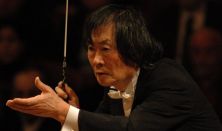
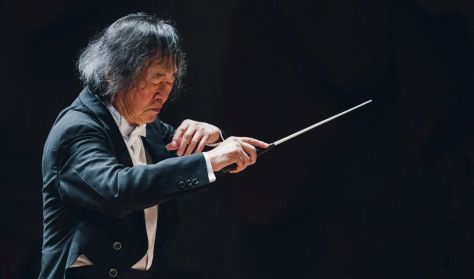
Kobayashi
Carl Orff: Carmina Burana
Zita Szemere soprano
István Horváth tenor
Csaba Szegedi baritone
Hungarian National Choir (choirmaster: Csaba Somos)
The choir of the Zoltán Kodály Hungarian Choir School (choirmaster: Ferenc Sapszon)
Hungarian National Philharmonic Orchestra
Conductor: Ken-Ichiro Kobayashi
Orff’s large-scale oratorical composition based on a collection of medieval Latin poetry became one of the most popular classical music works of the 20th century. The piece’s popularity rivalled that of rock music – truly a valid comparison as pulsating rhythm was also a defining element in Carmina Burana’s new style of refined simplicity and archaic influences. The theme of the work deals with the wheel of fortune, wine and rapturous love. The conductor is the legendary Japanese wizard Ken-Ichiro Kobayashi, who has formed an intimate relationship with the Hungarian Philharmonic Orchestra. It promises to be a truly special evening!
Originally, the title Carmina Burana referred not a piece of music, but rather a medieval (13th century) codex containing a collection of poetry. The texts, predominantly written in Latin and partially in Middle High German, Old French and Provencal, were found in the Benediktbeuern Monastery in Bavaria. In 1935/36, the German composer Carl Orff (1895–1982) set 24 verses of this goliardic poetry of scholars and monks to music, creating a large-scale cantata. The musical language of the work is characterised by rawness and directness; a modernisation of an imagined medieval style. A ‘neo’-style, then, yet one that is still thrillingly and zestfully new, just like the numerous neoclassical works that Stravinsky composed around the same time. There is something magical about Carmina Burana, a feeling that is enhanced by the vital role of repetition in the work. This remarkably stirring, hypnotising music never fails to hit the spot. Ken-Ichiro Kobayashi, the one-time winner of the Budapest International Conducting Competition, has been a favourite of Hungarian audiences for half a century. Kobayashi guarantees thrills in every genre and style, though he is always most at home when dealing with monumental oratorical compositions that require a large concert apparatus. So we can be sure that under his baton, the true sorcery of Carmina Burana will be brought to the fore.


Az Újszínház társulata tisztelegve a nagy elődök előtt klasszikus kabaréműsorral készül: humoros jelenetekkel, viccekkel, kuplékkal, sanzonokkal. A kabaré az a műfaj, mely a közönség örömére, szórakoztatására jött létre, hiszen nincs jobb gyógyír, mint a nevetés.
Zorán neve fogalom a magyar zenei életben, koncertjei mindig ünnepnek számítanak.
A vidéki birtokon megállt az idő. Unalmas és untató emberek gyűlnek itt össze, akik egymást és önmagukat is halálosan unják. Isznak, sírnak, panaszkodnak, és unalmukban kínozzák egymást. Szeretnének még szeretni, de már nem megy. Olyan emberek ők, akiknek sehogy se jó. Megöregedtek, elkedvetlenedtek és reményvesztettek. Mintha hajótöröttek lennének egy történelemből kiszakadt lakatlan szigeten. De még élnek, mert élni kell, és tűrnek, mert tűrni kell.
Victor Frankenstein a lehetetlent kíséreli meg: élővé teszi az élettelent. Évek megszállott munkájának eredményeképpen életre kelt egy mesterséges lényt, de…
Rejtőzz egy álarc mögé és válj azzá, akivé szeretnél! A maszk mögött a Walk My World legendái, istenei és hősei…
Közel két évszázada ad reményt és erőt „e rút világban” Liliomfi és Mariska minden ukázt felülíró szerelme, Szellemfi játékkedve és…
item(s) in basket
total:
Time limit has expired. Please, put item(s) in to basket again.